Oak Tree Memories
About
“Come discover something wonderful about the people you love.”
Every family already possesses extraordinary riches — not just financial wealth, but stories, wisdom, traditions, photographs, letters, recipes, and everyday moments. Most of it already exists. It just lives scattered across boxes, drawers, and memory, and too much of it quietly disappears.
Oak Tree exists to make that wealth easy to gather, easy to keep, and easy to share — so a family’s stories move a little closer together instead of a little further apart.
Our Story
Stanley. Jennie. The garden. The house. The estate sale. The conversation with Wendy. The realization that the problem wasn’t a lack of memories — it was the friction involved in preserving and sharing them.
I lost both of my parents over the past few years. Covid took Mom, and Dad died three years later at 99. I have memories of Mom and Dad — Jennie and Stanley — almost every day, and they’re always a little different, always with a few gaps.
When someone you love has passed and you run into one of those gaps, it’s frustrating. Mom, could you tell me your recipe for cherry pie? What was it you said about looking sharp as you get older? Dad, where did you live in New York during tax school? Tell me that joke again.
While they were alive, I could just pick up the phone and ask. I did that a lot. My own kids still do that with me.
Mom and Dad had stories. Dad tried to write his memoir, but he could never quite make it happen — always too caught up in the business at hand to sit down and do it. Years ago he’d sit with a legal pad and take notes; those notes are gone now. Later he tried recording himself on his phone. That didn’t work either. He was too old by then.
One afternoon, my wife Wendy and I found ourselves talking about our parents — Mom and Dad, and her own father, who died before I ever got to meet him. We both felt the same thing: their stories weren’t being preserved, and it was a loss we could do almost nothing about. Sure, we had boxes of photos and scrapbooks — but they weren’t really accessible. They gather dust in attics and closets. There’s no shortage of memories; there’s just real friction in preserving and sharing them. You can drop your photos into Dropbox or Google Drive, but accessibility is still the problem. And realistically — who is going to sit down and write a memoir? Who is going to read their grandfather’s?
That’s when it occurred to me that maybe we could solve this for our kids and grandkids — even great-grandkids not yet born. I’d been working with AI companies since 2019, amused and bewildered in equal measure by what this technology can do. Why not build something that lets people tell and share their stories — simple, accessible, and even a little fun? Wendy and I kicked the idea around and got excited about it. Maybe, we thought, family members could use gentle prompts to learn about their relatives and capture some of their wisdom, whenever they felt like it.
I was motivated enough to spend real time on it — thinking it through, and getting ChatGPT and Claude to help me figure out how it might actually work. I shared the idea with friends, and it struck a chord. This felt like a problem worth solving.
That’s Oak Tree Memories.
— Alan Schoenbaum, Co-Founder
Who We Are

Alan Schoenbaum
Co-Founder
Alan is building Oak Tree Memories with his wife, Wendy Davis, to bring families closer through storytelling.
He is a business lawyer and former partner at Akin, an elite global law firm. He left Akin to join Rackspace, a managed cloud computing company, where he served as general counsel for eight years. He still practices law, but spends most of his time these days enjoying nature, his family and friends, and their stories. Alan believes deeply in the golden rule, and in kindness toward others.
Alan grew up in San Antonio, Texas, and got both his undergraduate and legal education at the University of Texas at Austin. He, Wendy, and their black Labrador Retriever, Ziggy, live in Austin.
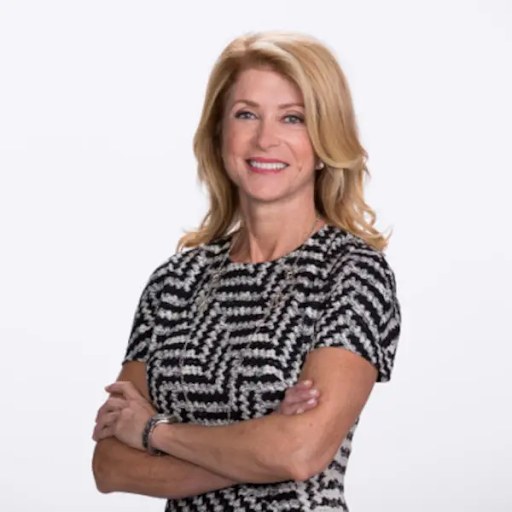
Wendy Davis
Co-Founder
Wendy believes that a family’s stories are an essential part of how children and grandchildren find context for how to live a meaningful life.
She was elected to the Fort Worth City Council, where she served for nine years, and to the Texas Senate in 2008, where she served two terms. Wendy has spent her life in the pursuit of helping others, including founding Deeds Not Words, a nonprofit that empowers young people — particularly high school and college students — to turn ideas into direct civic and political action. She currently advises up-and-coming politicians on how to turn their ideas into action, and how to win campaigns.
Wendy grew up in Fort Worth, Texas, where she attended Tarrant County College before earning her undergraduate degree at Texas Christian University, graduating first in her class. She went on to graduate from Harvard Law School.
Our Principles
These are the ideas that guide every decision we make at Oak Tree.